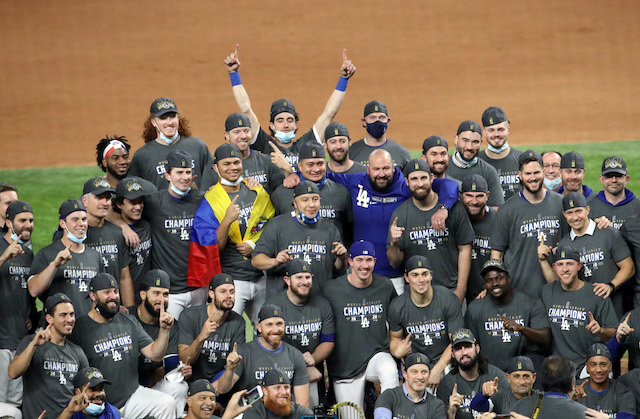

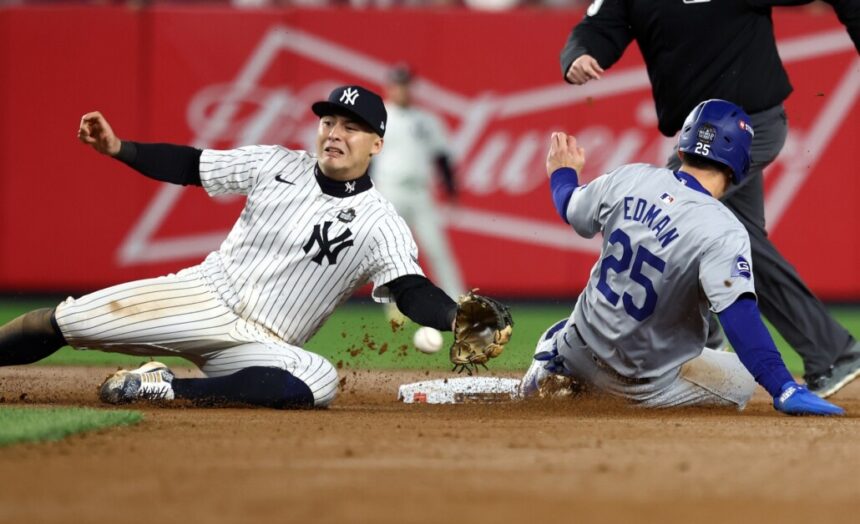
The Los Angeles Dodgers’ exhilarating five-game victory over the New York Yankees in the 2024 World Series reignited one of baseball’s most storied cross-league rivalries. This matchup has captivated fans for over 80 years. With their fourth championship in twelve World Series meetings between these titans, the Dodgers proved that this rivalry, transcending geography and generational boundaries, remains one of baseball’s most compelling narratives.
A Legendary Rivalry
The 2024 Fall Classic exemplified everything that makes this rivalry legendary. Los Angeles jumped out to a 3–0 series lead, highlighted by Freddie Freeman’s historic walk-off grand slam in Game 1—the first walk-off grand slam in World Series history—before ultimately closing out the series in five games. Though the Yankees forced a Game 5 and stormed to a 5–0 lead, the Dodgers mounted a stunning comeback, scoring five runs in the fifth inning with help from New York miscues and eventually prevailing 7–6 to capture their eighth championship.
Across the five games, New York actually outperformed Los Angeles in several statistical categories, finishing the series with more hits, home runs, stolen bases, and walks, as well as a lower ERA and fewer baserunners allowed, underscoring how thin the margin was despite the 4–1 final. That contrast between the Yankees’ cumulative edge on the stat sheet and the Dodgers’ superiority in high‑leverage moments reinforced how evenly matched these modern versions of the franchises remain.[5][7][1][2]
Unforgettable Moments
Beyond the recent matchup, the rivalry is built on decades of unforgettable moments. Including the 2024 World Series, the Yankees now hold an 8–4 advantage in their twelve all-time Fall Classic meetings with the Dodgers, the most frequent World Series pairing in MLB history. Iconic duels, from Reggie Jackson’s three-home-run Game 6 performance in 1977 to Fernando Valenzuela’s workhorse brilliance in 1981, helped define baseball culture for generations and still frame how fans view the Yankees–Dodgers rivalry today.
Today’s iteration features superstar talent equally riveting. Aaron Judge, the Yankees’ powerful offensive force, shared the stage with the Dodgers’ Shohei Ohtani, whom Judge has openly praised as the best player in the game. While Judge delivered his usual elite production in the regular season, Ohtani’s unprecedented 2024 campaign—becoming the first player in MLB history with at least 50 home runs and 50 stolen bases in a season—proved especially transformative once October arrived.
The rivalry’s intensity now extends deeply into fan culture. Fans dissect every performance, matchup, and strategic wrinkle across social media, podcasts, betting content, and advanced-stat communities, searching for any edge in predicting how these giants will clash. In regions such as Canada, this engagement increasingly overlaps with legalized sports wagering. For example, betting sites that are legal in Manitoba are regulated through PlayNow. Residents also have access to additional online sportsbooks that accept Canadian customers within the prevailing regulatory frameworks.
Baseball’s Biggest Spenders
The payroll dynamics fueling this rivalry cannot be overstated. In 2024, the Dodgers generated approximately $752 million in revenue and allocated an estimated 73 percent of it to player payroll and luxury tax obligations, reflecting a strong commitment to on-field investment. The Yankees, meanwhile, produced about $728 million in revenue and directed approximately 49.7 percent toward their roster and taxes, still placing them among MLB’s biggest spenders but with a notably different revenue‑to‑payroll profile than Los Angeles.
This financial firepower enables both franchises to acquire and retain elite talent at will. The Dodgers landed Shohei Ohtani on a record 10-year, $700 million contract, the largest deal in sports history, reinforcing their willingness to push spending boundaries to secure generational stars. The Yankees countered with a roster anchored by Aaron Judge, Juan Soto, and Gerrit Cole, combining long‑term commitments with marquee trades and signings that keep them firmly in the sport’s financial and competitive upper tier.
Coast-to-Coast Stakes
The rivalry’s geographical dimension adds enduring weight. When the Dodgers relocated from Brooklyn to Los Angeles in 1958, they carried a bitter New York rivalry across the continent, turning it into a coast-to-coast showdown that symbolized broader cultural contrasts between the East Coast’s intensity and the West Coast’s glamour. Those regional identities still color the way fans experience Yankees–Dodgers, giving each postseason meeting a sense of national scale and cultural stakes that go beyond wins and losses.
As these franchises continue to combine massive revenues, aggressive payrolls, and deep player-development pipelines, more October collisions between them feel less like a nostalgic wish and more like a recurring feature of MLB’s current era. The 2024 championship reinforced that star power, payroll allocation, and institutional excellence remain central to modern baseball supremacy, and that the Dodgers–Yankees rivalry endures not only because of its history, but because both organizations remain relentlessly committed to winning at virtually any cost.