


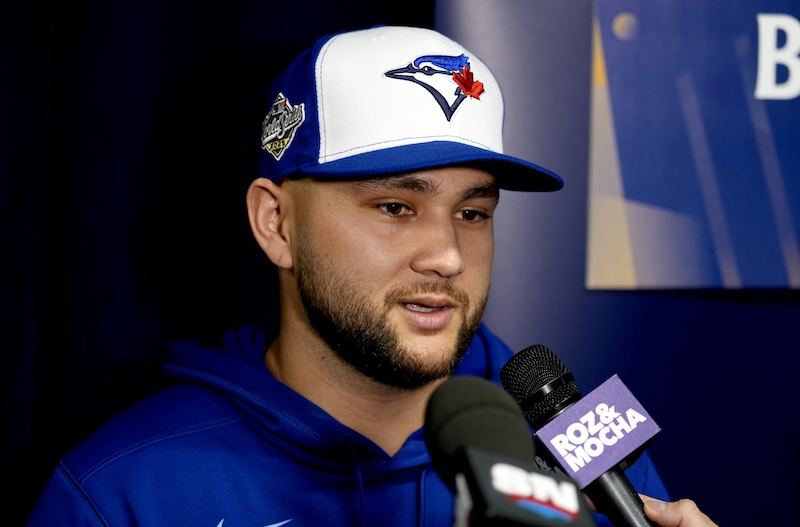
The Toronto Blue Jays’ decision to sign Kazuma Okamoto has added a new wrinkle to Bo Bichette’s free agency and, in the process, may have opened a clearer path for the Los Angeles Dodgers to make a run at the All-Star infielder. The four-year, 60-million-dollar deal gives Toronto another right-handed bat capable of handling the corner infield, and it forces the front office to rethink how much it wants to invest in Bichette long term.
At the same time, sportsbooks still see both clubs as legitimate contenders, with the Dodgers sitting near the top of the 2026 World Series board around +400 and the Blue Jays closer to the middle of the pack near +1300, numbers that will draw plenty of interest from the best online casino sites or sportsbook operators tracking offseason movement.
For the Dodgers, that context matters. A team expected to contend for another title has every incentive to stay aggressive in adding impact talent, especially if a rival’s roster shuffle nudges a star player a bit closer to the open market. If Toronto is less certain about its infield alignment and future payroll structure after committing to Okamoto, Los Angeles becomes an even more logical suitor for Bichette.
Blue Jays’ Infield Picture After Okamoto
Okamoto’s arrival gives the Blue Jays a flexible but crowded infield depth chart. The 29-year-old spent most of his career at third base with the Yomiuri Giants but has extensive experience at first and can also rotate through the outfield and designated hitter. That versatility is part of the appeal, and Toronto has already demonstrated a willingness to adjust the lineup by moving pieces around the diamond.
As The Athletic’s Ken Rosenthal and Will Sammon noted, Toronto’s internal plan depends heavily on how Okamoto looks at third base in spring training. If he wins that job outright, Addison Barger projects to shift to right field, while Okamoto could also see time at first, in left, or at DH if the Blue Jays decide to mix and match. Under both scenarios outlined by Rosenthal and Sammon, Ernie Clement likely settles in at second base unless the club re-signs Bichette to occupy that spot, a move that would push Clement into more of a utility and bench role after posting only a .622 OPS against right-handers in the regular season but a surprising .958 mark in the postseason.
How Okamoto Affects Bichette’s Market
The Okamoto deal does more than just add a bat; it tightens Toronto’s payroll and creates new questions about how much the front office wants to commit to another infielder. A four-year guarantee at 60 million dollars is a significant investment for a club that still needs to address pitching depth and outfield production. Every dollar allocated to Okamoto is a dollar that cannot be used toward a large, multi-year contract for Bichette without pushing the Blue Jays into a more aggressive spending tier.
Positional fit adds another layer. If Okamoto becomes the primary third baseman and Barger moves to the outfield, second base remains the most logical landing spot for Bichette in Toronto. That would mean paying a premium to keep a player who is no longer the everyday shortstop, even though his bat and track record still justify a major contract in free agency. For a front office that has already committed to a flexible, multi-positional approach, tying up significant money at one spot may not be the preferred strategy.
Dodgers’ Need And Opportunity
From the Dodgers’ perspective, the scenario in Toronto looks like an opportunity rather than a complication. Los Angeles has been aggressive in recent offseasons, both in free agency and on the trade market, and remains in win-now mode after consecutive deep postseason runs. The lineup is still elite at the top, but there is room to add another impact infielder who lengthens the order and offers positional flexibility.
Bichette fits that profile. He brings a proven offensive track record, postseason experience, and the ability to handle second base, which would allow the Dodgers to keep other core pieces in their preferred spots while still upgrading the overall infield defense. His age and production also align with the organization’s preference for players who can help immediately and remain part of a multi-year contention window. If Toronto hesitates, Los Angeles has both the financial resources and the competitive motivation to step in.
Jeff Spiegel’s View On Bichette And The Jays
Within this shifting landscape, Jeff Speigel of the Dodgers Heads Podcast framed Okamoto’s deal as a key turning point for Toronto’s offseason strategy. “The reason things look different today than they did yesterday is that the Blue Jays went out and signed corner infielder Kazuma Okamoto to a four-year deal. Now that they’ve got an infielder locked in, maybe they shift their focus from Bo Bichette to Kyle Tucker instead. And honestly, I think it’s pretty simple — if they were to bring in Bichette, they’d be betting on his success over the next few years while he’s under contract, and he’s already made it clear he’s fine playing second base, not shortstop.”
Spiegel’s read underscores how quickly priorities can change once a major signing is completed. If the Blue Jays pivot toward addressing other needs or pursuing a different star, that naturally increases the likelihood that Bichette explores options beyond Toronto. The Dodgers, sitting near the top of the World Series odds board and still looking for ways to separate themselves from other contenders, profile as one of the most logical landing spots should that happen.
For now, nothing is guaranteed. Toronto can still decide to keep Bichette and reshape the roster around a crowded but talented infield. Yet Okamoto’s signing has clearly altered the landscape, and it may be the move that ultimately opens the door for the Dodgers to bring another All-Star to Chavez Ravine.