


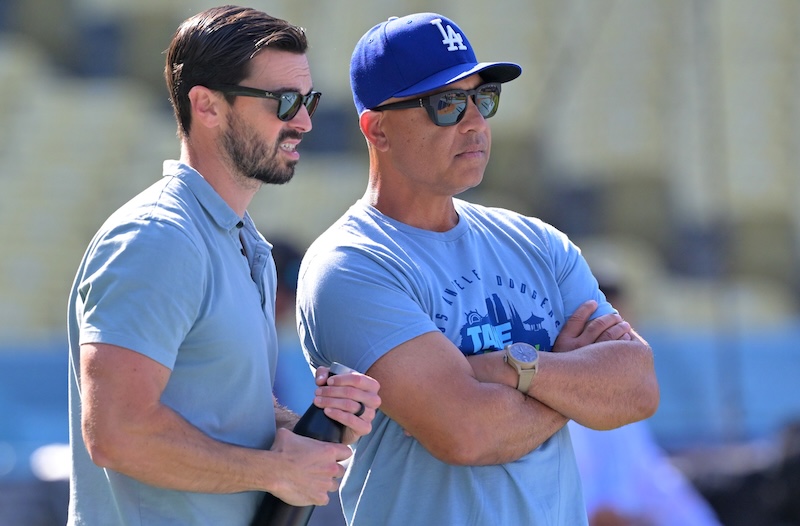
Dave Roberts has heard the criticism for almost as long as he has managed the Los Angeles Dodgers. He follows the spreadsheet. He lets the front office build the lineup. He pulls pitchers because the computer tells him to.
The truth is more complex. Roberts manages one of baseball’s most data-driven clubs, but the Dodgers do not run like a dugout controlled by a hidden command center. They run through a daily exchange of information, trust, and judgment. Even a fan checking a gambling website before first pitch can see the matchup angles, but Roberts still has to turn those edges into decisions that players accept.
That balance has shaped the Dodgers’ modern run. Andrew Friedman’s front office supplies the roster, the data, and the long-range view. Roberts and his staff turn that information into a lineup card, bullpen plan, and clubhouse message. The process invites scrutiny because the Dodgers play under championship expectations every season.
The Dodgers’ Analytics Engine
The Dodgers built one of baseball’s deepest operations by treating information as part of preparation, not as a replacement for people. Their front office studies matchups, workload trends, injury risk, defensive value, and bullpen lanes.
Roberts has never rejected that help. When he took the job, he said he welcomed and needed analytics and sabermetrics. He also made a point that still matters: “I’ll make decisions on the lineup. I’ll make in-game decisions.”
That remains the core of the arrangement. The front office can recommend. The staff can debate. Analysts can flag trends Roberts would not see on his own. But the manager still owns the move.
Roberts explained that division during a podcast appearance with Joe Davis and Orel Hershiser. Asked whether the front office makes the lineup, Roberts said, “They do not. They don’t make the lineup.” He added that the front office gives information, including fatigue patterns and injury-prevention notes, then leaves the final call to him.
“I can’t possibly know all this information,” Roberts said. “That this is stuff that’s suggested to me, and ultimately, I have to make the decision.”
That quote cuts to the center of how the Dodgers work. Roberts does not manage alone. He also does not simply execute orders. He manages with more input than past generations had, then takes public ownership.
How Roberts Builds Lineups
Lineup construction shows how the Dodgers blend numbers and relationships. Roberts weighs handedness, rest, matchup history, bullpen usage, and player health. He also talks to players who have earned influence.
That became clear before the 2024 season, when Roberts arranged Mookie Betts, Shohei Ohtani, and Freddie Freeman at the top of the lineup. Roberts later said he brought all three into his office and asked for their input. Betts preferred first or second. Ohtani did not care. Freeman did not want to hit only first.
That was not a spreadsheet decision. It was a Dodgers decision. The data could show how each hitter fits. Roberts still needed buy-in from three MVP-caliber players.
The same logic applied when Betts struggled during the 2025 season. Roberts considered moving him lower in the order, but decided against it. “Mookie is somebody I’m not going to hit lower in the order,” Roberts said.
Roberts also showed he will use the lineup to send a message. When Teoscar Hernández sat during a rough stretch, Roberts pointed to performance against right-handed pitching and the value of a reset.
Max Muncy offered another example. When he missed time, Roberts described what the lineup lacked without him: slug, on-base ability, left-right balance, and continuity through the first six spots. The Dodgers do not view a batting order as nine names. They view it as pressure applied across innings.
In-Game Moves Still Belong To Roberts
The most intense criticism usually arrives after pitching changes. Roberts has managed through postseason decisions, bullpen games, injury-thinned rotations, and nights when the safest plan failed.
Modern managers do not simply ask whether a starter looks strong. They weigh pitch shape, third-time-through risk, recovery schedule, bullpen freshness, and the next day’s needs. The Dodgers ask Roberts to consider it all.
Still, the dugout has to act in real time. Roberts reads body language, listens to coaches, watches the game, and compares that with the plan built before first pitch.
That is why some choices look conservative, and others look aggressive. A move can follow the matchup sheet and still depend on feel.
He also takes the heat when moves fail. After a bullpen loss in April 2026, Roberts said, “I wouldn’t do anything different.” That answer did not dodge accountability. It showed how he separates process from result.
Why The Criticism Has Not Changed The Model
Roberts has grown more secure in the role because the Dodgers trust the structure. He said in 2025 that his work relationships with players, coaches, and the front office were as good as they had ever been.
The Dodgers’ model requires alignment. Friedman’s group builds depth, studies probabilities, and protects the long view. Roberts protects the clubhouse, explains decisions, and absorbs criticism. The staff connects those two sides each day.
That job has only grown harder. The Dodgers carry stars who expect to play, role players who need clarity, pitchers with workload limits, and a fan base that treats every loss like a referendum.
That is why the analytics conversation often misses the point. The Dodgers do not win because data replaces human judgment. They win because data sharpens human judgment.
Roberts sits at the center of that system. He listens to the front office. He leans on coaches. He considers the clubhouse. Then he makes the decision.
For the Dodgers, that has become the difference between having information and using it. Their analytics department can identify the edge. Roberts has to decide when that edge fits the moment. As long as the Dodgers keep winning, that partnership will remain central to their standard in the National League.