


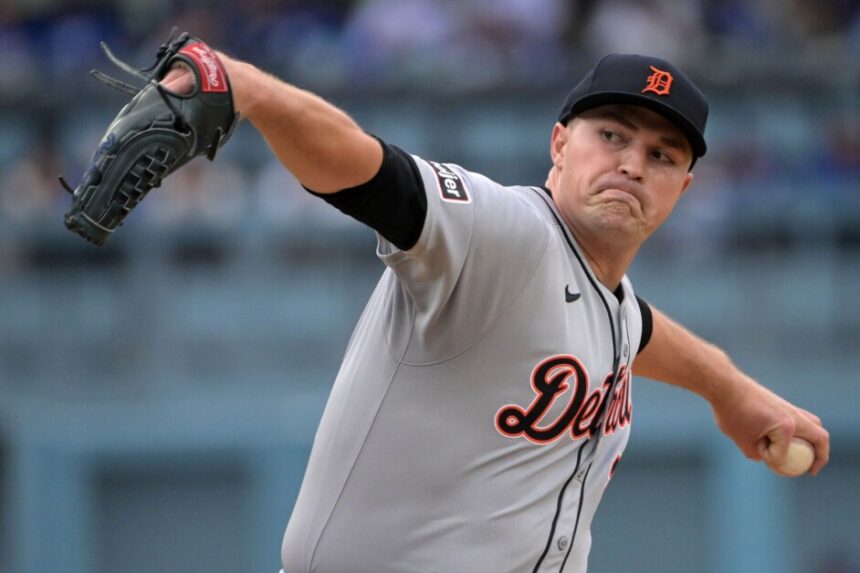
The Los Angeles Dodgers have already shaken the offseason by landing Edwin Díaz and now sit at the center of a second seismic storyline: a potential blockbuster trade for Detroit Tigers ace Tarik Skubal. Multiple reports indicate that the Dodgers and Tigers have discussed a mega-deal that would send the reigning back-to-back American League Cy Young winner to Los Angeles, with momentum characterized as real, but no agreement has been finalized.
At the same time, the Dodgers’ aggressive winter has strengthened their perception among bettors and evaluators, as futures markets react to both the Díaz signing and the possibility of adding another frontline starter. Melbet (Arabic: إنشاء حساب Melbet) and other sportsbooks have shortened Los Angeles’ World Series odds on the expectation that the club will continue to push for elite arms and deepen an already star-heavy roster.
Winter Meetings Centered On Skubal
KTLA sports anchor David Pingalore first pushed the Skubal story to the forefront from the Winter Meetings in Orlando, stating on social media that a deal between the Dodgers and Tigers is “essentially in place” and that the framework and pieces have been agreed to. His follow-up posts emphasized that two hurdles remain: ownership approval on the Detroit side and a long-term extension between Skubal and the Dodgers. Although no other outlet has confirmed that the trade is that close to completion, the report has kept Los Angeles and Detroit at the heart of the Meetings conversation.
Other national and local reports have echoed that the Dodgers are in active talks with the Tigers about Skubal, but they frame the discussions with more caution. Outlets have described the situation as substantive negotiations with genuine momentum rather than a completed or inevitable move, noting that Winter Meetings often feature aggressive framing designed to create leverage. The lack of a formal agreement or a physical schedule highlights that the situation remains fluid, even as the possibility of a blockbuster deal remains very real.
Conflicting Signals From Detroit
Coverage out of Detroit has highlighted the tension within the Tigers’ situation, with some reporting that the club is listening to offers on Skubal at a very high asking price. In contrast, others suggest that moving a homegrown ace would be highly unpopular. Skubal has established himself as one of the best pitchers in baseball, compiling a dominant 2024 and 2025 while fronting Detroit’s rotation and helping guide the Tigers back into postseason contention. Trading him would cut against the standard playbook for a small- or mid-market team that finally developed a true No. 1 starter.
However, reports note that Skubal is nearing the most expensive portion of his career and could command a record-setting contract for a pitcher if he reaches free agency. If the Tigers’ front office and ownership are reluctant to enter that financial territory, a trade now would be a way to convert a single star into multiple controllable assets. Even writers who doubt the likelihood of a deal concede that Detroit’s willingness to entertain offers has created an opening for a deep-pocketed club like the Dodgers to test the market.
What A Blockbuster Deal Could Cost
Analysts across national publications have begun sketching out potential packages that Los Angeles would need to present to Skubal. One widely discussed hypothetical framework suggested a Soto-level return, meaning the Tigers would ask for a combination of major-league-ready young pitching and multiple top prospects. Names frequently mentioned in speculative packages include Emmet Sheehan and other young arms, along with high-upside position players from the upper levels of the Dodgers’ system.
Because these proposals are illustrative rather than sourced to direct talks, the exact components remain unknown. What is clear from reporting in both markets is that Detroit will not move Skubal without a massive haul, and that the Dodgers are one of the few organizations with the prospect depth and financial strength to engage seriously. Any completed trade would almost certainly rank among the most significant prospect outlays of the Andrew Friedman era, likely altering the top of the Dodgers’ farm system for years.
Dodgers Already Land Edwin Díaz
The Skubal speculation has unfolded just as the Dodgers finalized a significant addition at the back of their bullpen. Multiple outlets report that Los Angeles and former Mets closer Edwin Díaz have agreed to a three-year, $69 million contract, giving the Dodgers the market’s top reliever and setting a new record average annual value for a relief pitcher. The deal came after Díaz opted out of the remaining two years and $38 million on his previous contract with New York in search of a larger guarantee.
In 2025, Díaz re-established himself as one of the game’s most dominant closers, posting a sparkling ERA, converting the vast majority of his save chances, and striking out well over a batter per inning. Scouts and analysts continue to praise his combination of an upper-90s fastball and wipeout slider, a mix that has produced some of the highest strikeout rates in the sport throughout his career. For the Dodgers, the signing not only locks down the ninth inning but also reinforces a broader strategy of investing heavily in leverage relievers after already committing massive resources to their rotation in recent offseasons.
How Skubal Would Fit The Dodgers
If Los Angeles does manage to complete a trade for Skubal on top of the Díaz signing, the club’s pitching staff would reach another level of dominance. Skubal has evolved into a true ace, with recent seasons marked by a low ERA, strong strikeout-to-walk ratios, and the ability to carry heavy workloads at the top of a rotation. His left-handed profile would complement an already star-laden group that includes Yoshinobu Yamamoto, Shohei Ohtani when he returns to whole two-way duty, and fellow high-end additions like Tyler Glasnow and Roki Sasaki.
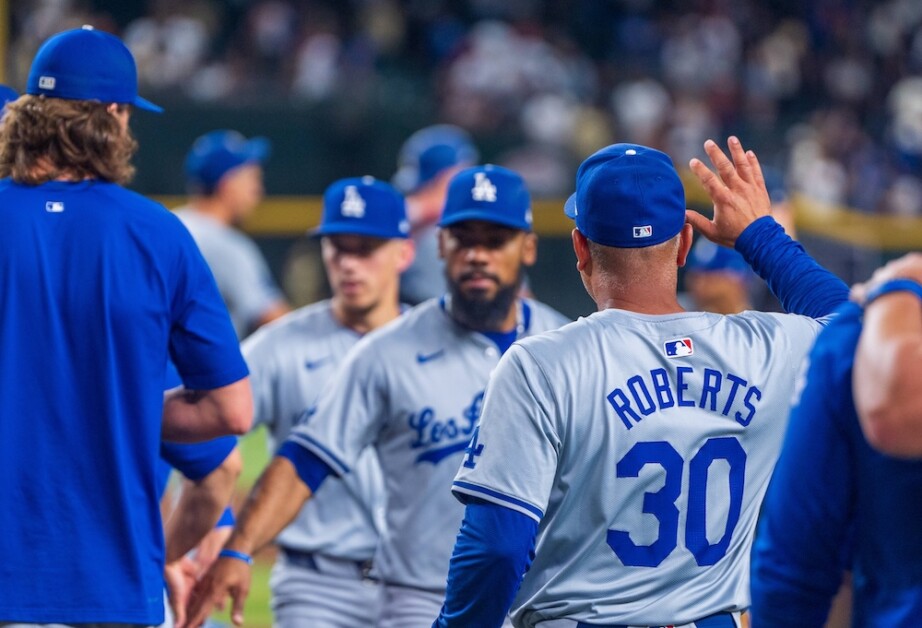
From a roster-construction standpoint, adding Skubal would give the Dodgers significant flexibility. Manager Dave Roberts could line up multiple elite options for postseason series, reduce pressure on younger arms, and moderate workloads during the regular season. The presence of Díaz at the back end would shorten games further, allowing Los Angeles to rely on its starters for quality rather than sheer volume, then hand over the leads to one of the game’s most feared closers.
Risk, Leverage, and Next Steps
Despite the apparent momentum, several factors still stand in the way of a Skubal trade for the Dodgers. Detroit’s ownership must decide whether the return package justifies moving a franchise cornerstone, fully aware of the public-relations hit that would come from trading a two-time Cy Young winner still in his prime. At the same time, Skubal and his representatives would need to be comfortable with the framework of a long-term extension in Los Angeles. This step would further escalate the total financial commitment for the Dodgers.
For Los Angeles, the calculus involves weighing the cost in prospects against the benefits of adding another frontline starter to a roster already built to win now. The organization has consistently demonstrated a willingness to utilize its financial strength to absorb risk. Still, it has also been selective about which players warrant trading from the top of the farm. Until an agreement is reached and announced, the Skubal story remains a developing situation rather than a finished deal, albeit one that underscores the Dodgers’ continued willingness to operate at the most aggressive edge of the market.