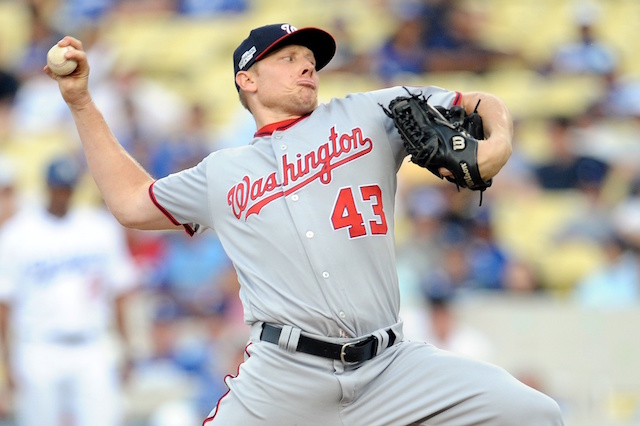


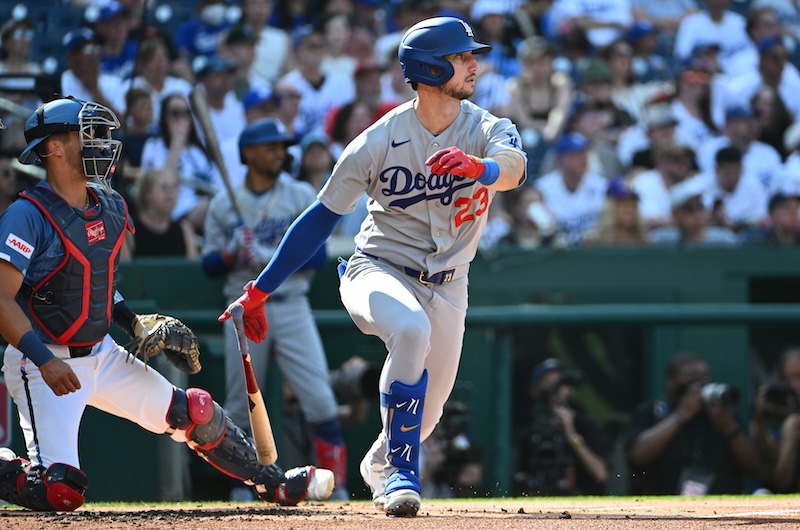
Kyle Tucker’s free agency deal with the Los Angeles Dodgers has become the latest flashpoint in MLB’s simmering labor tensions. His four-year, 240 million dollar contract is already being framed by some owners as evidence that the system is out of control.
The Dodgers’ aggressive spending, combined with their recent dominance on the field, has sharpened calls from rival clubs for a hard salary cap in the next collective bargaining agreement. Odds to win the 2026 World Series have moved in step, with Los Angeles now sitting as a clear favorite at around the low +200 range according to multiple sportsbooks, a shift that comparison platform bettingtop10.com is expected to highlight for futures bettors.
Tucker’s Deal Pushes Spending Limits
Tucker’s contract is not just big; it is structurally aggressive. Multiple reports put the agreement at four years and $240 million, with opt-outs after the second and third seasons that give the All-Star a path back to the market in his early 30s. The deal includes a $64-million signing bonus and $30-million in deferred money, which pushes the present-day value of the contract to north of $57-million dollars per year.
On a straight average annual basis, the $60-million figure positions Tucker at the very top end of the sport’s earners, trailing only Shohei Ohtani’s heavily deferred megadeal with the same franchise. For owners already uneasy with escalating guarantees, another Dodger contract at this level became an easy rallying point.
Reports out of the league’s finance circles suggest that Tucker’s present-day cost to the Dodgers is magnified by luxury tax penalties. Because Los Angeles is projected to blow past the highest competitive balance tax tier in 2026, the Dodgers could effectively be committing close to $120-million per year in combined salary and tax burden tied to Tucker alone. That kind of outlay, largely feasible only for a handful of markets, is central to the growing calls for structural change.
Dodgers’ Payroll Fuels Salary Cap Talk
Leaguewide frustration has crystallized around the Dodgers’ broader payroll picture as much as any single contract. Various projections indicate that their 2026 commitments will clear the $400-million mark once tax calculations and deferred structures are accounted for. That total sits tens of millions ahead of the next-closest team and exceeds the entire projected payrolls of some small-market clubs several times over.
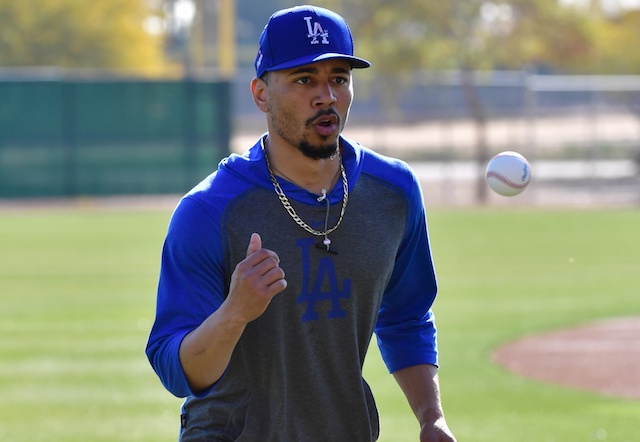
Rivals argue that Los Angeles has effectively “excavated” the top end of the salary landscape. Between Ohtani, Mookie Betts, Freddie Freeman, and now Tucker, the Dodgers are stacking elite contracts at a rate the rest of the league cannot match. The aggregate guaranteed money on their books for 2026 and beyond is reported to surpass what the bottom third of the league carries in total commitments.
This is the backdrop for renewed salary cap chatter. Owners from smaller and mid-market teams are using the Dodgers’ spending as Exhibit A in internal discussions about a hard cap and a true salary floor. Early talking points center on pushing for a cap starting in 2027, tied to the next CBA, arguing that franchise values would jump if cost certainty tightened at the top.
Union Resistance and Lockout Fears
The players’ union, led by Tony Clark, has shown no sign of warming to a cap. The union’s stance has remained consistent: a cap would artificially restrict earnings in a period of record revenues and strong fan interest. For players and agents, the Tucker deal serves as a recent example of the market functioning as designed, with stars capturing a share of booming media and local revenue.
A salary floor, which some owners see as a trade-off for imposing a cap, presents its own issues. Smaller-market clubs that currently operate lean payrolls could face operational pressure if forced to spend to a mandated minimum. Those teams may be less eager to overhaul the system, especially if they believe revenue-sharing tweaks could address competitive concerns without a full cap.
This clash of priorities sets the stage for a tense run-up to the next bargaining cycle. The current agreement expires after the 2026 season, and early talks are expected to begin during the upcoming campaign. With owners’ rhetoric hardening and the union dug in, the prospect of a winter lockout will hang over the sport if either side chooses to make Tucker’s contract and the Dodgers’ payroll a line in the sand.
Media Rights, Ohtani and the Bigger Picture
Not everyone in the industry believes spending is the core problem. High-profile agent Scott Boras has repeatedly argued that MLB’s real issue lies in underleveraged media rights and content strategy. From his perspective, teams like the Dodgers are simply capitalizing on revenue streams that the league as a whole has not maximized.
Shohei Ohtani is central to that argument. Estimates around his off-field value suggest he generates hundreds of millions of dollars in additional revenue for the Dodgers and the league through international interest, sponsorships, and broadcast reach. In that context, mega deals for Ohtani and now Tucker can be framed as rational investments rather than excesses that threaten competitive balance.
If owners lean into cap demands instead of broader media and distribution reforms, a collision with the union becomes more likely. If they instead focus on growing the overall revenue pie, some of the pressure around top-end spending could ease without rewriting the sport’s economic rules.
What It Means for 2026 and Beyond
On the field, the Dodgers remain positioned as the team to beat. Most major sportsbooks have them as 2026 World Series favorites in the +200 to +250 range, implying roughly a one-in-three shot at a three-peat. That status only sharpens other owners’ frustrations, as fans and media point to the link between financial muscle and October success.
For the league, the Tucker deal is more than just another big contract story. It has become a symbol of a wider debate over what MLB should look like in the next decade: a heavily regulated economic system with tighter cost controls, or a high-end market where a few giants set the pace, and everyone else adapts.
The outcome will depend on how far owners are willing to push salary cap demands and how firmly the union is prepared to resist. The Dodgers, and Tucker’s contract in particular, sit squarely in the middle of that fight.