

The Los Angeles Dodgers continue to post elite run prevention despite a growing list of injuries across their pitching staff. Even with key starters sidelined, the club entered the final week of May with a 3.12 team ERA, second-best in Major League Baseball. That consistency reflects a roster built for durability, not just star power.
Tyler Glasnow remains on the injured list with low back spasms after exiting his May 6 start against the Houston Astros. Blake Snell also joined him after a brief outing with the team, undergoing a procedure on May 20 to remove three bone chips from his left elbow. While discussions about performance trends and odds often surface on platforms like 29Black Casino, the Dodgers’ sustained pitching success is rooted in depth and development that support a solid core, rather than projections.
Organizational Depth Drives Stability
The Dodgers have long operated with the understanding that a full season demands far more than five starting pitchers. President of baseball operations Andrew Friedman and his staff consistently build rotations with 12 to 15 viable options in mind. That philosophy allows the team to absorb injuries without a sharp decline in performance.
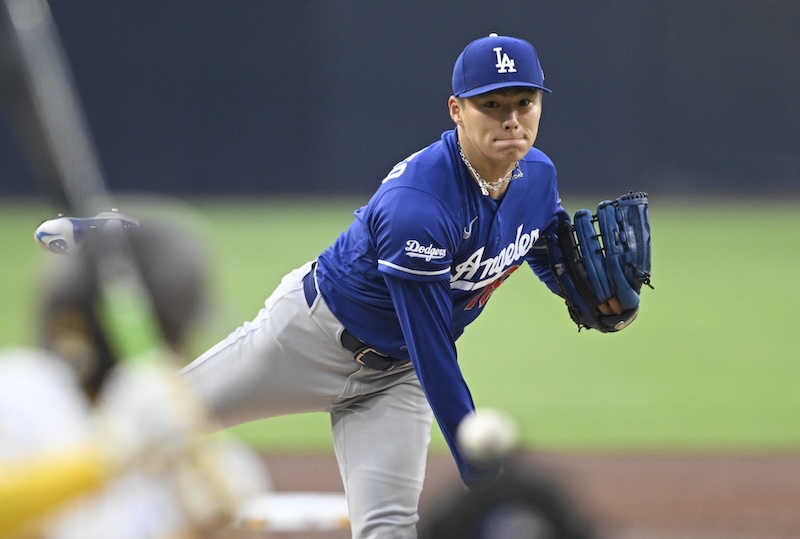
That depth has been tested early and often in 2026, and the response has been strong at the top of the rotation. Shohei Ohtani has opened the season in dominant form, posting an ERA under 1.00 with more than a strikeout per inning across his first eight starts, giving the staff a true ace presence every fifth day. Yoshinobu Yamamoto has followed as a dependable frontline arm, working deep into games and carrying an ERA in the low 3.00s while continuing the form that earned him World Series MVP honors in 2025.
Behind them, emerging arms have helped stabilize the pitching staff amid constant turnover. Justin Wrobleski has seized his opportunity, going 5–0 with a 1.25 ERA across his first 36 innings, including a stretch of five starts in which he has allowed just two runs in 32 innings for a 0.56 ERA, the best mark among starters with at least 30 innings. Emmet Sheehan has provided needed length as well, giving the Dodgers more than 40 innings while keeping his ERA in a range that keeps the team in games and offering swing-and-miss stuff that plays in the middle of the rotation.
The organization does more than stockpile arms. Each pitcher undergoes a detailed evaluation, including pitch design adjustments and biomechanical analysis, with an emphasis on refining arsenals rather than making wholesale changes. Coaches work to sharpen pitch mixes, add or rediscover velocity, and optimize movement profiles tailored to each pitcher’s strengths. That process has allowed established stars like Ohtani and Yamamoto and emerging contributors such as Wrobleski and Sheehan to maximize their tools, creating a steady pipeline of arms capable of competing at a high level when injuries hit the rotation.
Strategic Additions Fill Gaps
The Dodgers supplemented their pitching staff by acquiring left-hander Eric Lauer from the Toronto Blue Jays on May 17. The move cost a player to be named later or cash considerations, signaling a low-risk addition with potential upside.
Lauer struggled to a 6.69 ERA in eight appearances with Toronto this season, but he brings experience and versatility. Manager Dave Roberts indicated Lauer will initially work as a multi-inning option out of the bullpen, with the possibility of moving into the rotation if needed.
This type of move reflects a calculated approach. Rather than rushing top prospects into high-leverage situations, the Dodgers target experienced pitchers who can stabilize innings while maintaining development timelines for younger arms.
To make room on the roster, the team transferred Brusdar Graterol to the 60-day injured list. Graterol continues to recover from shoulder surgery and has yet to appear this season. His absence adds to a growing list of unavailable relievers, further testing the team’s depth.
Bullpen Carries Increased Load
With the rotation in flux, the bullpen has had to take on a heavier workload. Relievers have frequently covered multiple innings and, at times, entire games structured as bullpen efforts.
Jack Dreyer emerged as a key contributor before landing on the injured list with shoulder discomfort. He posted a 2.08 ERA across 21.2 innings and led Dodgers relievers in workload. His absence creates another challenge for Roberts, who has relied on flexibility rather than fixed bullpen roles.
The Dodgers’ relief strategy emphasizes matchups and performance over rigid assignments. That approach allows Roberts to adjust quickly based on game flow and pitcher availability. It also helps distribute innings more evenly during stretches of heavy scheduling.
Even with multiple bullpen injuries, the group has maintained effectiveness. Their ability to limit runs has been central to preserving the team’s top-tier ERA.
Development System Fuels Results
The Dodgers’ success on the mound is not accidental. It stems from one of baseball’s most advanced player development systems. From the major league level to Camelback Ranch and the minor leagues, pitchers receive individualized plans designed to maximize their strengths.
Pitch design technology, data analysis, and biomechanics all play a role. Coaches help pitchers refine release points, adjust pitch shapes, and improve sequencing. Many arrive with one skill set and leave with a more complete arsenal.
This system allows the Dodgers to extract value from pitchers who might struggle elsewhere. It also creates continuity, ensuring that replacements can step into defined roles without disrupting the overall structure.
The results remain clear. Despite injuries to Glasnow, Snell, Graterol, Dreyer, and others, the Dodgers continue to rank among the league leaders in run prevention. They have avoided the sharp regression that often follows significant pitching losses.
Looking Ahead
The coming weeks will further test the Dodgers’ depth. A compressed schedule and ongoing injuries will require continued roster adjustments and creative pitching management.
Still, the organization has positioned itself to handle these challenges. By prioritizing depth, development, and adaptability, the Dodgers have built a system capable of sustaining success even under strain.
Whether that approach carries them through the entire season remains to be seen. For now, it has kept them firmly in contention and among the most efficient pitching teams in baseball.