

One of the biggest additions to Major League Baseball will be implemented on a full-time basis this year, with the Automated Ball-Strike (ABS) challenge system coming to the regular season.
The ABS challenge system was first utilized at the MLB level last year, but only in select Spring Training contests and the 2025 All-Star Game.
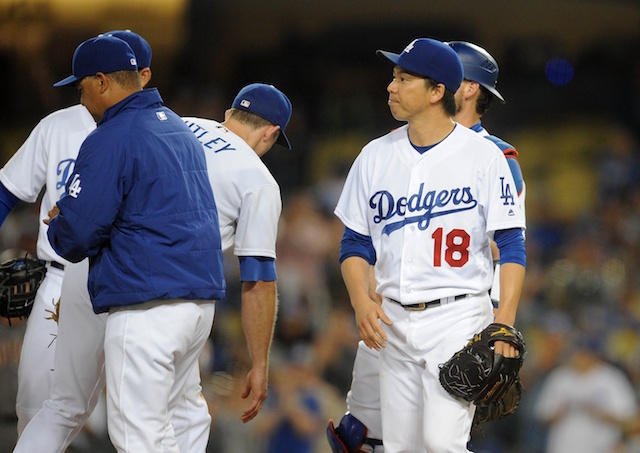
As teams navigate the system in Cactus and Grapefruit League games this year, the Los Angeles Dodgers have struggled judging calls, going 3-14 on challenges overall entering Sunday’s split-squad games. The Dodgers did get one to go their way on Saturday, but they rank last in challenge success rate.
Manager Dave Roberts noted that the team needs to get better at deciding when to challenge calls, via Bill Plunkett of the Southern California News Group:
“Our idea of the strike zone individually, collectively, just hasn’t been great as far as where the ball’s at, where the pitch is at. I honestly don’t know the answer right now.”
Roberts revealed that the Dodgers are planning to hold a team meeting to address their struggles with the ABS challenge system:
The Dodgers are planning an organization-wide “forum” on the ABS system for Tuesday, Roberts said.
“We’ve got some information we’ve accrued over the spring,” he said. “It’s real, and I think it’s good for the game. But we’ve got to get better at it.
The Dodgers must improve at judging calls, as teams have only two challenges per nine-inning game.
Challenges are retained if a team correctly disputes an umpire’s call, but lost if they lose a challenge. Thus, there is some strategy involved to ensure clubs don’t waste an opportunity and miss out on potentially challenging a call later in the game.
Players on either offense or defense can challenge a call by tapping their cap or helmet, but only the batter, pitcher, and catcher can do so. Additionally, a challenge must be made within two or three seconds of the umpire’s call, and without any assistance from the dugout.
How does the ABS strike zone work?
MLB executive vice president of baseball operations Morgan Sword recently explained that the strike zone for the ABS challenge system was created by establishing a two-dimensional rectangle that is set halfway back on home plate (8.5 inches from the front), with the top and bottom set in proportion to a batter’s height.
That’s based on the length between 27% to 53.5% of a batter’s height, which is roughly the letters of the jersey to the knees when in a normal stance.
MLB takes detailed measurements of player heights to determine the strike zone for each.
Have you subscribed to the Dodger Blue YouTube channel? Be sure to ring the notification bell to watch player interviews, participate in shows and giveaways, and stay up to date on all Dodgers news and rumors!