

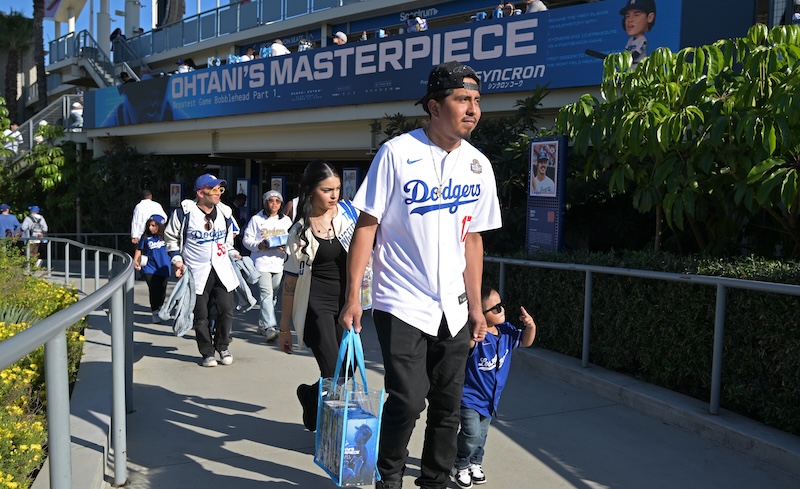
Shohei Ohtani, Yoshinobu Yamamoto, and Mookie Betts already drive attendance and ratings. Now their likenesses are at the center of a booming market for Dodgers bobbleheads and comedic merchandise that is reshaping how fans collect, display, and share team culture.
Dodger Stadium’s promotional calendar for 2026 leans heavily into character, humor, and crossover appeal. From Ice Cube in a lowrider to anime‑style interpretations of World Series moments, the club is clearly testing how far it can push novelty while still honoring a historic brand identity.
Bobbleheads As Mini Storytelling Devices
The Dodgers’ 2025 bobblehead schedule reads like a storyboard of both the current roster and franchise mythology. Shohei Ohtani alone is featured on multiple dates, including MVP and 50/50 concepts that play on his two‑way superstardom and the team’s back‑to‑back title narrative. Freddie Freeman, Mookie Betts, Yoshinobu Yamamoto, Tyler Glasnow, and others each anchor their own giveaway nights, turning the home schedule into a serialized collectibles run for fans who want to build an entire shelf of recent heroes.
Those pieces do more than nod to star power. Several 2025 bobbleheads reference specific games, moments, or themes, a subtle yet effective form of storytelling. Dates tied to announcer Joe Davis, franchise icon Fernando Valenzuela, and broadcaster‑beloved figures like Vin Scully bring media, history, and on‑field performance into a single physical object. Fans are not just lining up for a free item. They are lining up for a piece of narrative they can hold.
That philosophy carries into the 2026 promotional slate, where World Series references are even more explicit. Bobbleheads built around “Game 7” plays for Will Smith, Miguel Rojas, Max Muncy, and Mookie Betts underscore how tightly the club is now weaving its championship imagery into mass‑market giveaways. Rather than a single commemorative item, fans can chase an entire set that reconstructs a title run in plastic and spring‑loaded heads.
Crossovers, Cameos, and Comedy
The comedic side of Dodgers merchandise is most obvious in the growing slate of crossover and celebrity bobbleheads. The 2025 calendar includes a Roki Sasaki piece, a Kobe Bryant crossover, and an Ice Cube bobblehead that leans into Los Angeles car culture and hip‑hop. By 2026, that strategy expands with Shaquille O’Neal and Son Heung‑min joining the lineup, bridging NBA and global soccer audiences with baseball.
Those choices move the giveaways beyond traditional player‑only themes and into broader Los Angeles identity. An Ice Cube lowrider bobblehead or a Hello Kitty hoodie night serves both as humor and as cultural signaling. It says the Dodgers are comfortable with a certain level of self‑aware fun, and it invites fans who might not follow WAR or FIP to engage through entertainment and lifestyle.
The club has also experimented with playful nicknames and alter egos on its bobbleheads. A Teoscar Hernández “Mr. Seeds” concept is a straightforward example. It turns an in‑game quirk into a character, and then into a collectible. That approach mirrors how internet memes form, spread, and then solidify into permanent fan shorthand. The difference is that the Dodgers are now building those memes into their official merchandising pipeline.
Commemorative Merch After A Title Run
The back‑to‑back championship era has unlocked another tier of novelty and comedic merchandise around the Dodgers brand. Replica World Series trophies, gold jerseys, and mystery ring giveaways give fans an entry point into the championship aesthetic at a relatively low cost compared to authentic on‑field items. Retail partners and third‑party manufacturers have followed suit with their own interpretations, from minimalist art pieces inspired by famous plays to tongue‑in‑cheek designs that remix classic logos.
Limited‑run items tied to the 2025 title have taken on a secondary life online. Fans showcase bobblehead walls, unbox ring replicas, and pass around photos of more outlandish pieces in group chats and on social feeds. In that environment, the most shareable items often carry at least a hint of comedy, whether it is an exaggerated pose, a pop‑culture mash‑up, or a wink at a viral moment.
That shareability creates a feedback loop. Fans reward the funniest or most creative ideas with attention. The club and its partners see what cuts through the noise and adjust future designs accordingly. Over time, the result is a promotional calendar that looks more like a rotating gallery of jokes, references, and callbacks than a simple list of logoed T‑shirts.
AI, Anime Clips, And The Next Wave
Across MLB, video platforms transform sports into animated features with AI, turning raw game feeds into stylized, bite-sized cartoons in real time. If the Dodgers plug that kind of tech into their existing data and broadcast workflows, you could see every Ohtani homer, Yamamoto strikeout, or Mookie Betts web gem auto-converted into anime-style clips tailored for younger fans in Los Angeles, Japan, and beyond.
For a franchise already leaning into anime‑inspired visual treatments on social media and select merchandise, that concept is less hypothetical than it might seem. AI‑generated highlights could be cut, stylized, and captioned in multiple languages within seconds, then matched to specific markets or demographics. A Betts diving stop might appear as a chibi‑style clip in one feed and as a more realistic digital illustration in another, all derived from the same underlying play data.
The bridge to physical merch is obvious. If an AI‑rendered Ohtani bat flip or Yamamoto strikeout pose gains traction, it can quickly migrate onto bobbleheads, T‑shirts, pins, and stickers. That shortens the distance between an in‑game moment, a viral piece of content, and a tangible item on a fan’s shelf. It also allows designers to test concepts digitally before committing to a production run.
What It Means For Dodgers Fans
For Dodgers fans, the surge in bobbleheads and comedic merchandise means more choice and more targeted experiences. Dedicated collectors can chase entire series that document a season or era. Casual fans can pick spots that gravitate toward items that align with their favorite player, their neighborhood, their heritage night, or their sense of humor.
The risk for any team in this space is dilution. Too many promotions can blur together. The Dodgers so far have mitigated that by tying many giveaways to specific stories, themes, or crossovers, rather than simply flooding the schedule with generic player sculpts. As AI and animation tools mature, that balance will be worth watching. The same technology that can turn every Betts web gem into an anime clip could also flood the market with look‑alike designs.
For now, though, the trend is clear. Bobbleheads have become miniature story capsules, and comedic, crossover‑driven merch is a core part of how the Dodgers communicate with their fan base. Whether it is Ice Cube in a lowrider, Mookie freezing a Game 7 line drive in plastic, or a future anime‑inspired Ohtani collectible born from an AI highlight, the team’s promotional universe is expanding fast.